Introduction
A midlife strength transformation may seem impossible if you're a woman in your late 40s or 50s. Through midlife, and as hormones shift through perimenopause and menopause, your body starts losing muscle faster than it used to. Less muscle means a slower metabolism, so the same food you've always eaten starts landing on your middle. Your bones begin to lose density, and your energy goes with them. It's easy to decide this is simply what getting older looks like. It isn't. And what changes is strength.
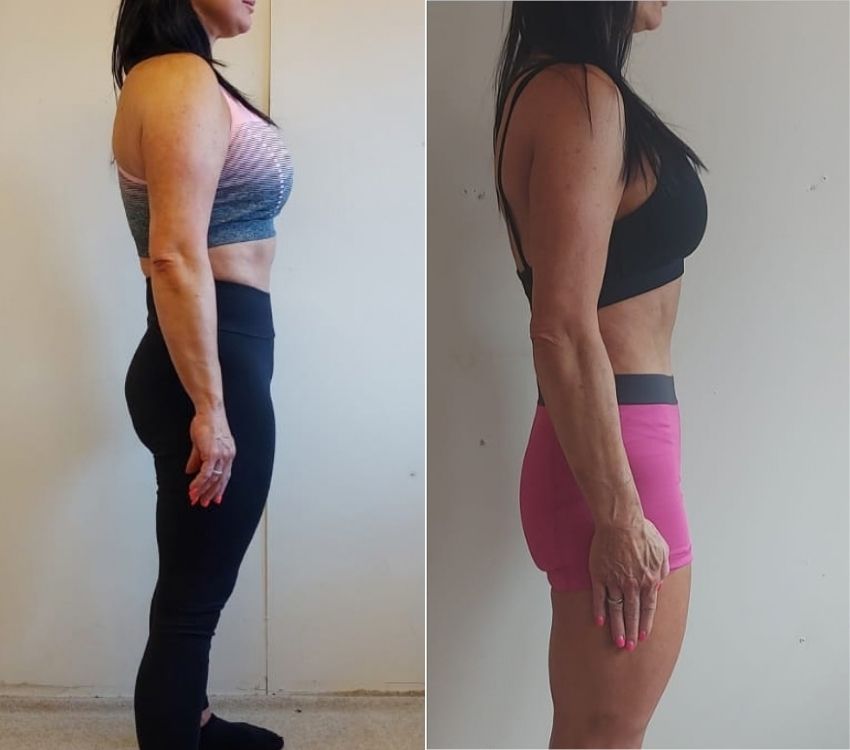
Hellen's midlife Strength transformation in menopause
Vital statistics:
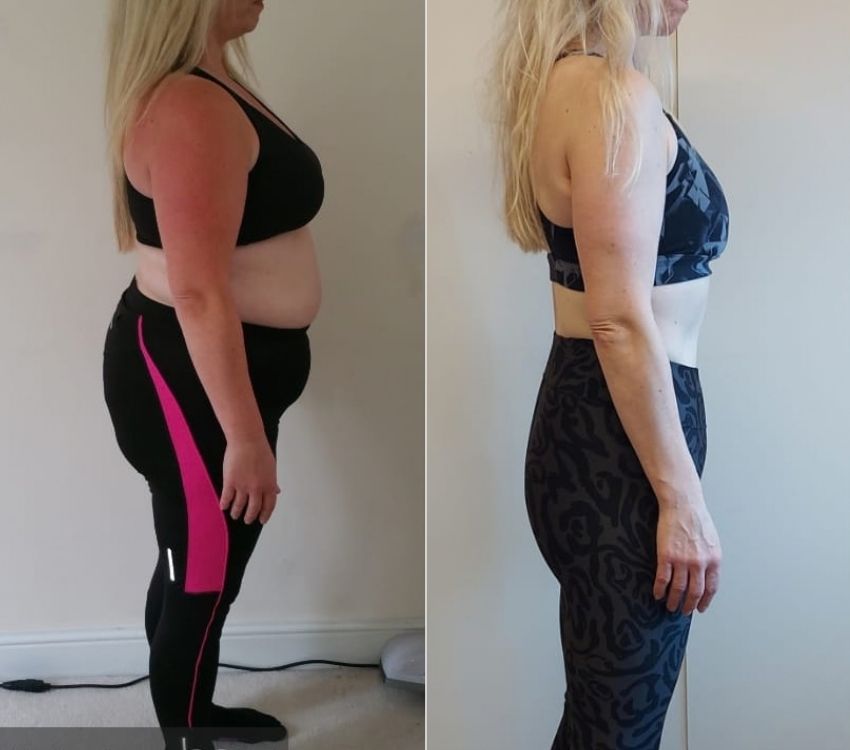
- Started: 5'1", touching 14 stone, nearly 50
- Now: 8 stone 2, aged 52, very toned and strong for her size
- Timeline: 2019 → ongoing (around 7 years)
- Service: 1:1 PT (in-person), strength training twice a week
- Key insight: "Steve has given me the confidence to take up gymnastics, become a cheerleader, and try things I never thought I could."
- Transformation arc: Yo-yo dieter → lifter → gymnast and cheerleader
For years, Hellen's weight yo-yo'd, she says:
"Put simply, I was flabby and unfit," she says. I hid it well under baggy clothes, but I wasn't happy."
She'd tried every diet going and puffed her way through the odd group class. None of it stuck.
"I was out of breath after a gentle warm-up, getting bigger and just couldn't see why."
Hellen is 5'1", married with three children; she was touching 14 stone and had had enough.
"Finally realising I couldn't do it by myself, at nearly 50, I messaged Steve. That's when things really changed."
The First Weeks: "I Hated It"
Hellen is honest about how it started.
"I turned up on day one. I hated it. I hated him too (not that he was horrible, he wasn't!) for not letting me stop when I thought I couldn't do another rep."
That's Steve all over. There are two words he won't have in his gym: "I can't." Say it, and you'll likely find a couple of extra reps added on to prove that you can. Nobody enjoys the start. As Steve puts it, if they did, they wouldn't need him.
But Hellen kept showing up. And that's where it began to turn.
Why "Eat Less, Do More Cardio" Doesn't Work Here
For years, the advice to women was cardio, cardio, and more cardio. Eat less, run more, sweat it off. In menopause, that can make things worse. Cut your food and pound the treadmill, and you risk losing even more of the muscle that keeps your metabolism, bones, and strength going.
Steve's approach is the opposite: resistance training to maintain muscle and keep bones strong, alongside a proper look at what you eat. "To get fit and strong, it's not rocket science," he says. "If you eat the right foods, get regular exercise, do the right resistance training, you'll lose weight, you'll get stronger."
For Hellen, the food side was the breakthrough for her midlife strength transformation.
"In the first weeks and months, we talked a lot about my relationship with food, alcohol, portions, sneaky snacking and timing," she says. "Steve explained (in easy-to-understand terms) that you cannot out-train a poor diet, and with that, things started to 'click,' and I threw myself all-in."
There are no meal plans that last two days. Steve holds people accountable instead, and he's honest when they slip up. "My job isn't to tell you what you want to hear," he says. "My job is to tell you what you need to hear."
Strength Training: The Heart of It
Hellen trains with Steve twice a week in his private, fully equipped gym. No queueing for machines, nobody watching, just the work. And the work is built around lifting.
That's deliberate. In midlife, muscle is what everything else hangs on. It keeps your metabolism ticking over, so you're not fighting your own body every time you eat. Loading your bones with weight helps keep them strong as they start to thin. And it's what lets you carry the shopping, get up off the floor and keep up with the kids without thinking about it.
Steve builds every programme around the person in front of him and pushes it on as they get stronger. For Hellen, that meant proper resistance work from the start, not a treadmill and a pair of pink dumbbells. The cardio she'd tried for years had never changed her shape. Lifting did.
Year One: Discovering Abs Under the Flab
Once it clicked, Hellen went all in. She joined a gym to add to her sessions with Steve, and the changes started to show.
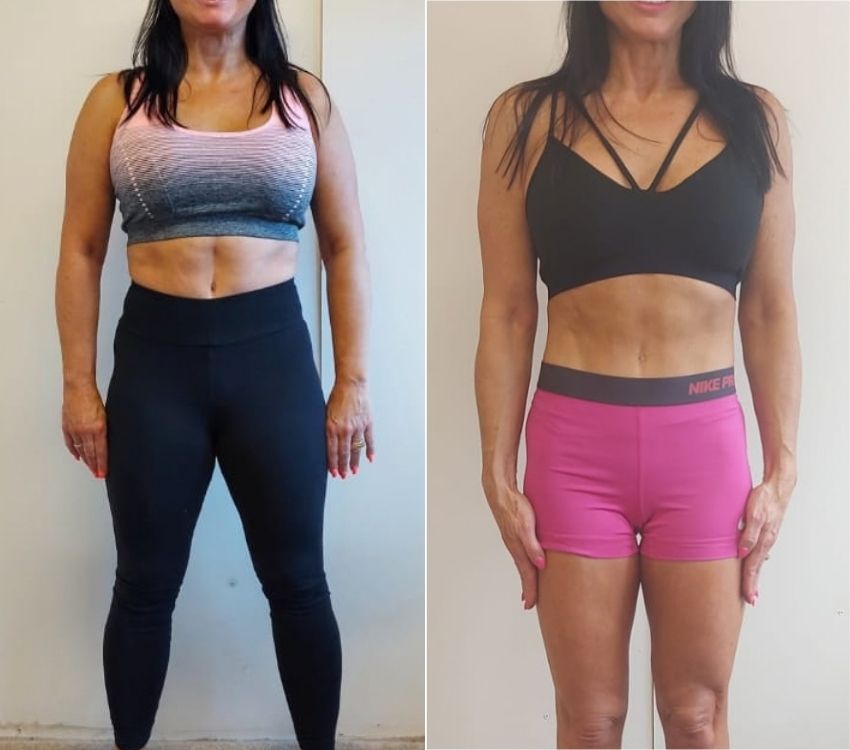
"I could see the weight going down and the flabby bits I'd always hated actually starting to tone up. I had definition. I had abs under the flab (who knew). People started to notice, and my confidence grew."
Steve tracks all of this properly. Every client starts with a two-hour consultation covering measurements, body fat, blood pressure, lung capacity and photos, then reviews every three to four months with new targets. The data is the data, and seeing it change keeps people going.
A year in, Hellen had lost 2 stone. She even felt fit enough to take on the Wolf Run, a 10km muddy obstacle course Steve organised with some of his other clients.
"Running for a bus wasn't even on the agenda before I met Steve,"
From "I Can't" to "I Can"
Steve sees the same mental journey in client after client. At first it's "no way, I can't do that." A few months in, when they see their body changing, it becomes "hmm, maybe I can." Later still: "I can do this, and I want to do this."
Hellen went further than most.
"Steve has given me the confidence to take up gymnastics, become a cheerleader, and try things I never thought I could, reminding me that if I believe I can, I will."
That's a woman in her 50s taking up gymnastics, on a foundation of years of strength training. "Physically and mentally, she's a different person," says Steve. "A completely different person."
What Made It Stick
1. Strength, not starvation. Hellen didn't try to shrink herself with endless cardio and tiny portions. She lifted, built muscle, the very thing midlife tries to take away, and her body changed shape as a result.
2. She kept showing up. Hellen hated the first sessions, and she came back anyway. Twice a week, for years. Consistency did the rest.
3. Food to fuel the training. "You cannot out-train a poor diet." Understanding her eating, drinking, and snacking was what made everything click.
4. Someone to answer to. "I need pushing and someone other than me to be accountable to!" Hellen says. Years on, that's still why she comes.
Hellen Today
Hellen is now 52, 8 stone 2, very toned and very strong for her size. She doesn't look her age, and she's still strength training with Steve twice a week.
"Our sessions are always fun, full of belly laughs and quite honestly, life-changing, I see him as the saviour that rescued me from a miserable muffin-top midlife, and whilst I'm the one who puts the work in, he's the superstar that saved me."
Midlife didn't mark the start of Hellen's decline. Strength training made it the stage of life where she got strong and achieved her midlife strength transformation that she so wanted.
If you're in your 40s or 50s and wondering whether it's too late to get strong, it isn't. Hellen has a message for you:
"If you are at the end of your own tubby-tether, hit him up, so that he can help you Totally Smash It, too!"
It'll be hard work, and you'll earn every pound. But you'll be glad you did.
Conclusion
Hellen's midlife strength journey also gave her confidence
Midlife tells many women that their best days are behind them. The weight creeps on, the strength drains away, and everyone says "that's just your age." Hellen's story shows that it doesn't have to be like that. It's nota bout luck. It's about lifting proper weights, twice a week, for years and believing you can.
Ready to get strong in midlife and beyond? Work with Steve >